Varnish mitigation remains a priority for many users in the Caribbean. It has evolved significantly over the last decade and is well understood by subject matter experts. More importantly, reliable and effective varnish mitigation technologies have developed and are readily available to control and remove varnish.
These turbines and components are in the power generation, ammonia production, methanol production that use compressors, gearboxes, oil coolers and heat exchangers, just to name a few. Users are challenged with aging assets, volatile production demands and significant price increases for new lubricants.
Turbine Oil Stress Factors Lead to Varnish
Lubricants are exposed to significant stress factors. These stress factors increase the potential for the oil to oxidize and breakdown. This leads to premature oxidation, if not managed properly.
Common stress factors include heat, water and other contaminants. Combined together, they accelerate oxidation. Long chain molecules develop from oxidation by-products. Eventually tars, sludge and varnish form. Some plate-out on metallic surfaces. And some remain in solution.
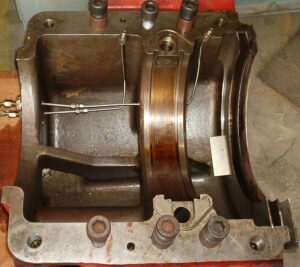
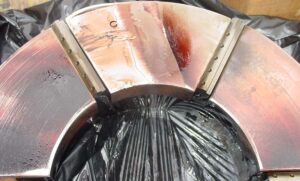
Varnish is observed frequently in journal bearings, servo control valves, reservoirs, piping, coolers, and filters used in turbines.
Varnish deposits are observed in many forms. Some are soft and some are hard. These are difficult to remove from metal surfaces. They also insulate machine surfaces resulting in higher surface temperatures. These high surface temperatures accelerate the rate of oil oxidation further, leading to more varnish.
Common stress factors include heat, water and other contaminants...that can eventually lead to tars, sludge and varnish.
Varnish Deposits on Turbine Bearings
How Should We Manage Oils to Prevent or Reduce Varnish?
Users must keep heat and contamination within their limits. However, aged lubricants will still oxidize and breakdown. Turbine users must consider periodic lubricant testing that must include MPC (Membrane Patch Colorimetry) testing and analysis. If MPC values are increasing, there are Varnish Removal System available suitable for your application and lubricant. Other tests include viscosity, FTIR (Fourier Transform Infrared Spectroscopy), and Acid Number (TAN).
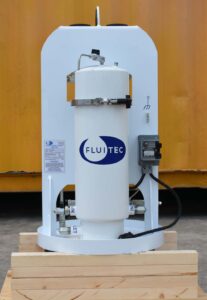
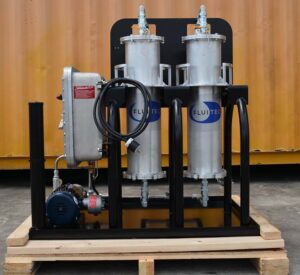
Increasing MPC values can be managed with multiple technologies. Fluitec’s VITA ESP (Electrophysical Separation Process for Varnish Removal is recommended.
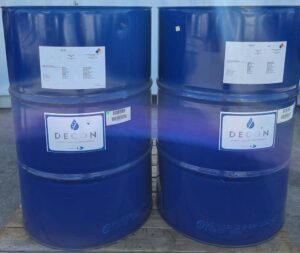
Another option is application of Decon made by Fluitec. Integrated with Solvancer®, another patent-pending technology, Decon dissolves varnish from machine surfaces. It also reduces the lubricant’s varnish potential and offers long term protection against varnish, sludge and tars.
MPC Oil Testing and Analysis
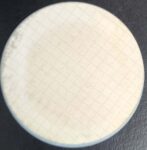
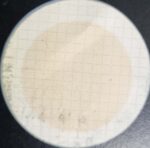
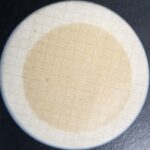
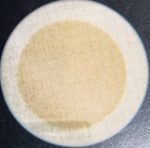
The most common test for varnish is the MPC test or Membrane Patch Colorimetry, ASTM D4378. A MPC patch is created by separating insoluble bodies from the lubricant through a membrane patch. The color of the patch is determined using a Spectrophotometer. These values guide engineers to determine the varnish potential of the lubricant.
ESP media is specifically designed to remove oil degradation products (oxidation by-products) via adsorption forces. This process is know as selective Chemisorption. It is offered by Fluitec. By removing these unwanted oxidation by-products, sludge, tars and varnish are significantly reduced. Users are given a peace of mind to avoid trips and unwanted downtime due to Varnish. Fluitec offers VITA II ESP and VITA III ESP systems for small and large reservoirs.
Decon integrated with Solvancer® is designed to focus specifically on varnish and organic deposits. Decon optimizes polarity, hydrogen bonding and dispersive forces to target deposits and varnish. These are dissolved and held in the lubricant. Internal machine surfaces are kept clean and free of deposits. The lubricant’s Varnish potential decreases. Decon provides long term protection against deposits and sludge.
Decon is an evolutionary product development by Fluitec designed specifically to address varnish issues in lubricants and assets. The product is currently used very successfully in thousands of critical turbines, gearboxes and hydraulic systems and endorse by some major OEMs.